
The Best Desk Setup for Afternoon Headaches
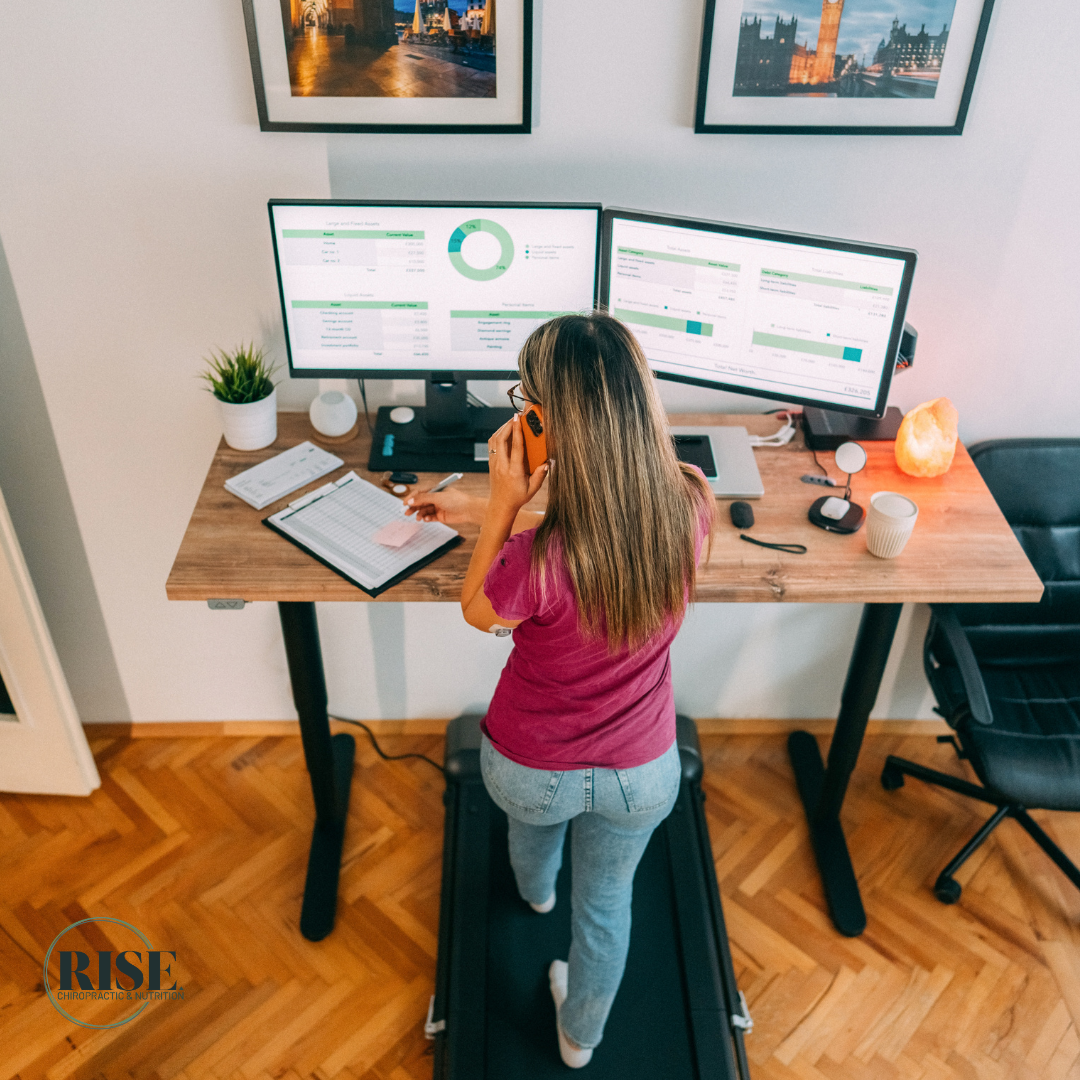
The Best Desk Setup for Afternoon Headaches (and Why It's Only Half the Fix)
You typed it in around 2:30, which is about when the headache showed up. Best desk setup to stop afternoon headaches. Fair question, and we'll answer it straight. If you sit at a desk all day, your setup should be working for you instead of against you. So here's the setup that actually helps. And then here's the part the setup can't touch, because for a lot of people that second part is the thing actually running the show.
Start with the desk setup, because it does matter
If your afternoon headaches track with your workstation, this is the setup worth having:
- Raise your monitor so the top of the screen sits around eye level. That keeps you from dropping your chin toward the desk for eight hours straight.
- Pull the screen close enough that you're not leaning in to read it. If you're squinting or creeping forward by the afternoon, the screen is too far or too small.
- Get your feet flat on the floor and your forearms supported, so your shoulders aren't quietly doing the work of holding your arms up all day.
- Add a standing option if you can, mostly because it gets you changing positions instead of freezing in one. The best posture is the next one, not a perfect one you hold for hours.
- Get up and move every hour or so, even for sixty seconds. A body that changes position all day holds on less than one locked into the same shape from nine to five.
None of that is wrong. If your setup is a laptop balanced on a throw pillow on the couch, fixing it will help, and you'll feel a difference. And then, for a lot of people, the headache comes back anyway. That's the part worth understanding, because it's the part that tells you what's really going on.
Why the afternoon headache comes back anyway
Here's what we see all the time. It doesn't start as a headache. It starts as a little tightness across the mid or upper back, a one or a two out of ten, a couple afternoons a week, back when it still went away once you left work. Then it gets louder. More days than not. Somewhere in there it turns into a headache one day a week, easy to write off as a long day or not enough sleep. By the time someone books with us, they're getting them three or four days a week and saying some version of, I don't really know what's wrong, I just feel off and kind of groggy.
By then they've already tried things. The better water bottle. The massage that felt great for a day. The supplements, the foam roller, the stretch a coworker swore by. None of it stuck, and that starts to feel like a personal failing, like you should have this figured out by now. It isn't, and you shouldn't. Every one of those was a reasonable thing to try. They were just aimed at the spot that hurts, and the spot that hurts is the last domino, not the first.
You can have the most perfect setup in the world and still land right there. Because the driver isn't the chair. It's that your body is already wound tight, and when you keep pulling your head toward the screen, your upper back keeps running to hold it up, making up for where your head is. It never gets to clock out. It stays on, all day, every day. A chair can't switch that off, and a stretch can't either. There is no stretch that makes it go away for longer than an hour, because a stretch can't tell your body it's safe to stop bracing. (More on that pattern in what your posture is actually telling you.)
What has to come before any desk setup works
This is where the order matters. The vibration plate, the sauna, the red light, the massage gun, those are all great. They're also secondary. If the body is still guarded and tense, you're spending money and time on tools that can't make the change you're after, and then wondering why nothing holds.
The first thing is helping the body feel safe enough to let go. Until that happens, it'll keep bracing no matter what you buy. Then you get the stuck joints and the tight muscles moving together, because they keep each other going. Stuck joints keep the muscles tight. Tight muscles keep the joints stuck. You can chase one without the other for a long time and not get anywhere, which is why the thing that worked for a day never worked for a week. That's the work a desk setup was never going to do, and it's a big part of what a chiropractor actually does beyond back pain.
What actually changes the afternoons
The afternoons change when you stop managing the headache and start with why your body's bracing in the first place. That's the piece the monitor riser and the better chair can't reach. Once your body is calm enough to let down, and the joints and muscles are moving the way they're supposed to, the upper back isn't running a full shift just to hold your head up. The thing that used to build all day has less to build on. That's not a quick fix, and it's not a forever thing either. It's finding the cause and working it, instead of chasing the spot that hurts.
If your afternoon headache keeps coming back
If you've spent a year optimizing your desk and it keeps showing up, you're not doing it wrong. It got normalized, and it does not have to be this way. The setup was a reasonable place to look. It just wasn't the whole picture. The thing underneath was your body keeping the lights on all day, and that's a thing you can actually do something about.
If you'd like someone to look at what your upper back is doing all day, that's what a first visit is for. You can book one here, or if you'd rather talk it through first, a Discovery Call is a free, no-pressure place to start.
Common questions about desk setups and afternoon headaches
Can a desk or chair really cause afternoon headaches?
IIt can play a part. It's just not the whole story. A setup that drops your head forward all day makes your upper back work harder to hold it up, and that steady strain builds. If your body is already braced, even a great setup won't fully switch that off.
What's the best monitor height to prevent headaches?
Set the top of your screen at about eye level and pull it close enough that you're not leaning in. That keeps your chin from dropping toward the desk for hours, which is one of the patterns we see behind upper back tension and afternoon headaches.
Why do I get a headache at the same time every afternoon?
Because it's been building since morning. Your upper back works a little harder each hour to hold your head where it's drifting, and by mid-afternoon that steady load is loud enough to feel as a headache. It's less about that one moment and more about everything leading up to it.
Will a standing desk fix my afternoon headaches?
It can help, mostly because it gets you out of one frozen position. What it won't do on its own is change a body that's already bracing. If standing makes the headache disappear, great. If it doesn't, that's your sign the driver is lower than your desk height.
How do I know if it's my desk or something else?
A simple tell: fix the setup and take real movement breaks for a couple of weeks. If the afternoon headache still shows up on schedule, the setup was the secondary piece. At that point it's worth having someone look at what your upper back is actually doing all day, instead of buying the next thing.

Let's Get You Moving Better
You don't have to keep dealing with pain, plateaus, or disconnected care. Book your evaluation and let our team show you what whole-body care can do.